Rogue Herbalist
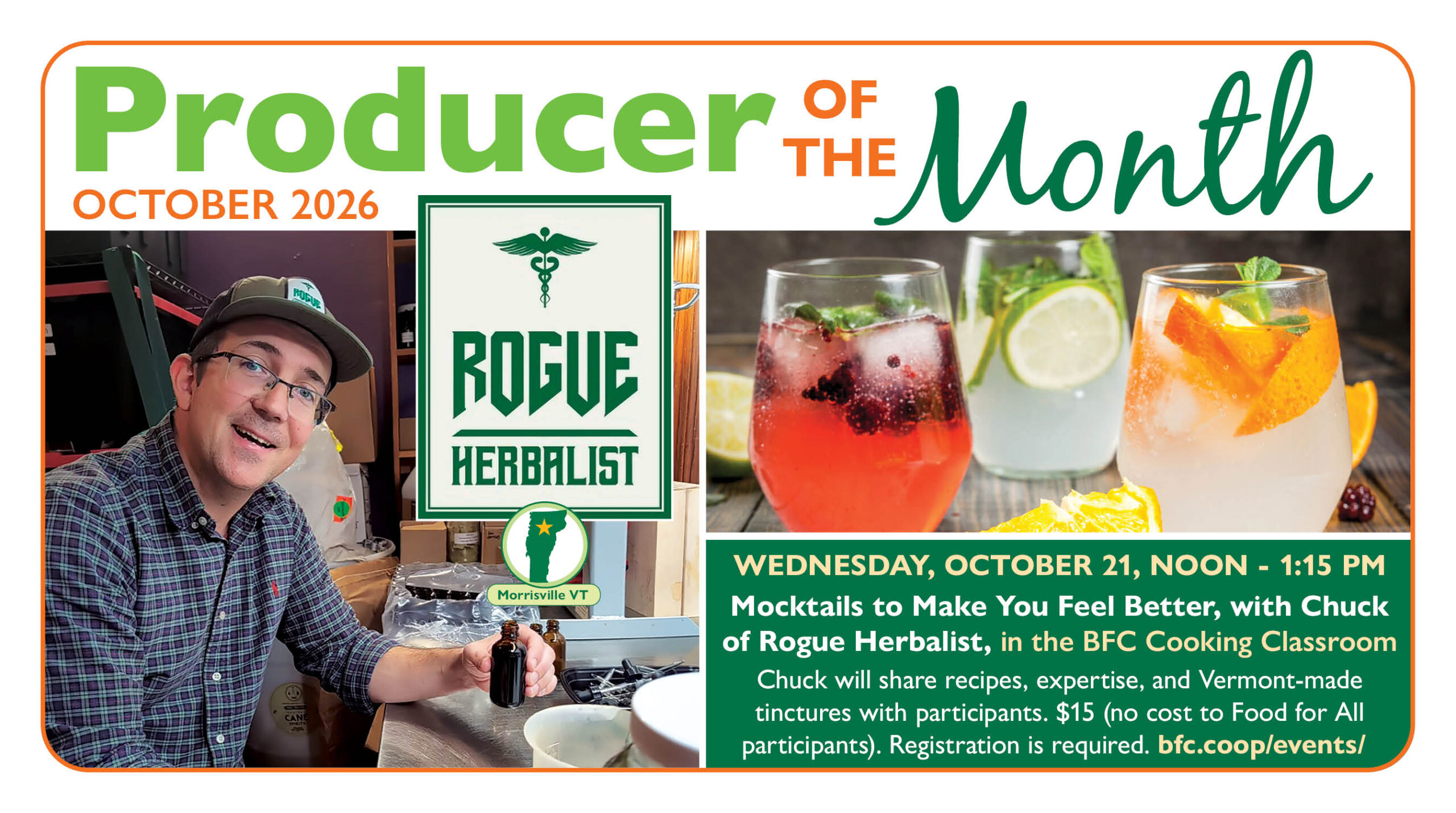
Rogue Herbalist could not be a more fitting name for Chuck Riffenburg’s apothecary business.
Located in Morrisville, Vermont, Rogue Herbalist is the passion project of a man who has spent more than two decades studying herbalism, natural products, and the traditions surrounding plant medicine. For Chuck, the word “rogue” indicates a willingness to do things differently, reflecting a lifelong habit of questioning assumptions, pursuing knowledge, and forging his own path where none have been clearly marked. He is dedicated to deepening his community’s knowledge about the abundant natural resources available to us and creating products that positively impact as many people as possible.
Chuck’s interest in plants and medicine developed quite early in childhood. We love a heartwarming story about a family vocation passed down through generations, but that does not describe Chuck’s journey. He says his family was “a fairly ordinary 1990s household” with no particular focus on natural or organic living, though his mother did enjoy gardening. One of Chuck’s earliest plant-related memories was the satisfaction of successfully transplanting a dandelion from the front yard into a pot.
Somewhat more peculiar than childhood dandelion appreciation, whenever Chuck was given conventional medicine as a child he would read the labels and research the active ingredients, gradually developing a deeper interest in how substances affect the body. He was curious about what exactly was in the medicine and how it did what it was intended to do. That natural, precocious curiosity stuck as he grew older and eventually led him to wonder whether there might be more natural ways of supporting the body.
Chuck’s study of herbalism became more focused during his teenage years while experiencing significant anxiety and unpleasant side effects from pharmaceutical medications. Chuck began exploring simpler, more natural options like chamomile, valerian, and physical exercise. Seeing success from these, he was motivated to study further. He pored over books like The Complete Herb Encyclopedia by Nico Vermeulen.
After high school, Riffenburg took a summer college course in medicinal plants at what was then Castleton State College in Vermont. The class proved pivotal, reinforcing a path that would eventually become his life’s work. He later earned a Bachelor of Arts in Philosophy and Religion, with a minor in Political Science, from Flagler College in St. Augustine, Florida. Although herbalism was not offered as a major, Riffenburg continued studying it independently throughout college. He took courses in nutrition and worked for two herbal businesses, building practical experience alongside his academic studies.
His formal education in herbalism continued well beyond college. He pursued advanced studies through the East West School of Planetary Herbology and the Vermont Center for Integrative Herbalism, while also spending years working in the natural-products industry. During a period working for Nutraceutical Corporation as a sales representative covering Vermont, New Hampshire, and Maine, he continued to see himself less as a salesperson and more as an herbalist whose job happened to involve products. It was also during this period that he began developing his wildcrafting skills and deepening his knowledge of the plants growing around him.
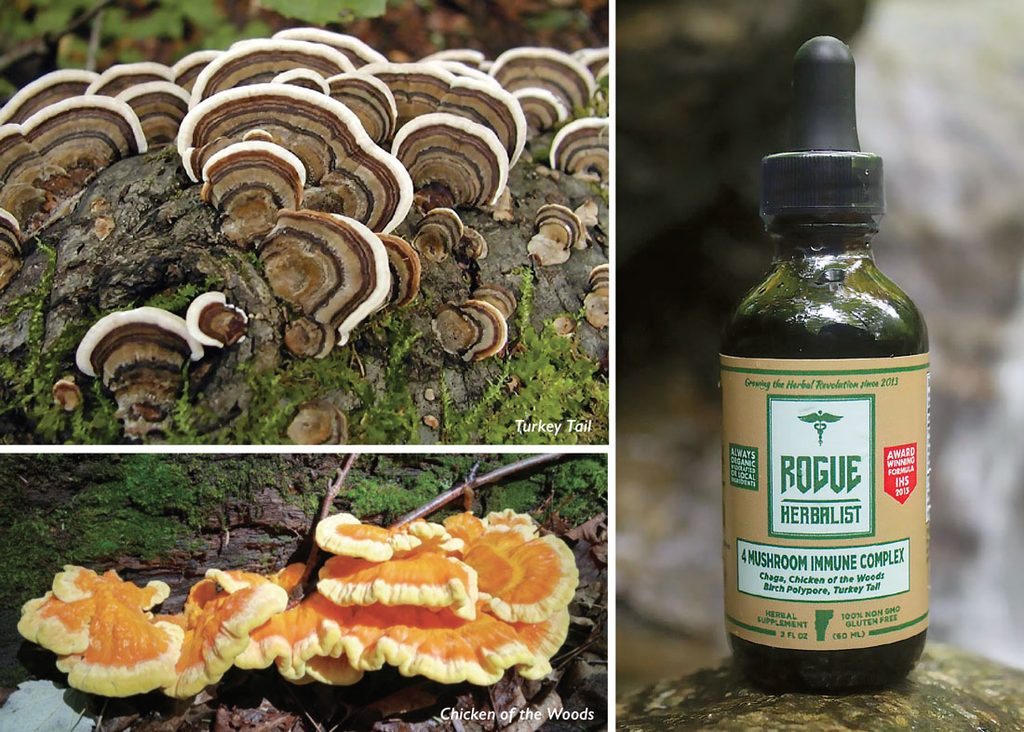
In 2015, Riffenburg won an award at the International Herb Symposium for his Four Mushroom Immune Complex. That recognition helped convince him to leave his corporate position and pursue herbalism more seriously. He spent another two years studying at the Vermont Center for Integrative Herbalism before launching Rogue Herbalist as a business in 2018.
These days Chuck’s approach draws from multiple traditions, including Western herbalism, Ayurveda, and Traditional Chinese Medicine, while also incorporating contemporary knowledge of pharmacology, anatomy, physiology, and chemistry. Much of his work involves helping people understand the plants and traditions behind the products he makes. These traditions are not necessarily competing systems. One of the things he finds most exciting is discovering where traditional knowledge and modern scientific understanding overlap.
That same curiosity drives his approach to product development. Riffenburg often begins with a problem he wants to solve and, because of his extensive knowledge of herbs and their properties, can often envision the basic formulation in his mind before even touching the ingredients. He develops products through repeated iterations and taste tests, paying close attention not only to how a formulation works conceptually, but also to whether people will actually enjoy taking it. He sees herbalism as existing at an interesting intersection between medicine and food, both because natural ingredients are bioavailable to the body in the same way food is and because the remedies have to be palatable.
For Chuck, herbalism is ultimately about something much bigger than making products or even studying plants. It is about freedom. He believes that people have a fundamental right to learn about the natural world and to understand the substances they put into their bodies. Chuck does not claim to have all the answers. The willingness to keep asking questions may be the most important part of his philosophy. He wants people to become curious about plants, curious about their own health, and confident enough to make informed decisions for themselves.
The philosophies Chuck has developed do not require rejecting modern medicine and he is quick to emphasize the importance of education and informed decision-making rather than blindly accepting either conventional medicine or natural remedies. He encourages people to ask questions, understand potential benefits and risks, and consult appropriate medical professionals.
People often come back to the apothecary and thank Chuck for something that has helped them and he is quick to redirect the gratitude. “Thank the plants,” he says, because ultimately, he maintains that he is not the one who created these medicines. He sees himself merely as a bridge to another way of doing things and a repository of knowledge about something that has existed for a very long time. “The plants were here long before us. We are still learning from them,” he says. Chuck believes we have a responsibility to preserve that knowledge and respect the plants that provide all these benefits to us.
Wednesday, October 21, Noon – 1:15 pm
Mocktails to Make You Feel Better, with Chuck of Rogue Herbalist
in the BFC Cooking Classroom
Written by Sarah Galgano