Watson Wheeler Cider
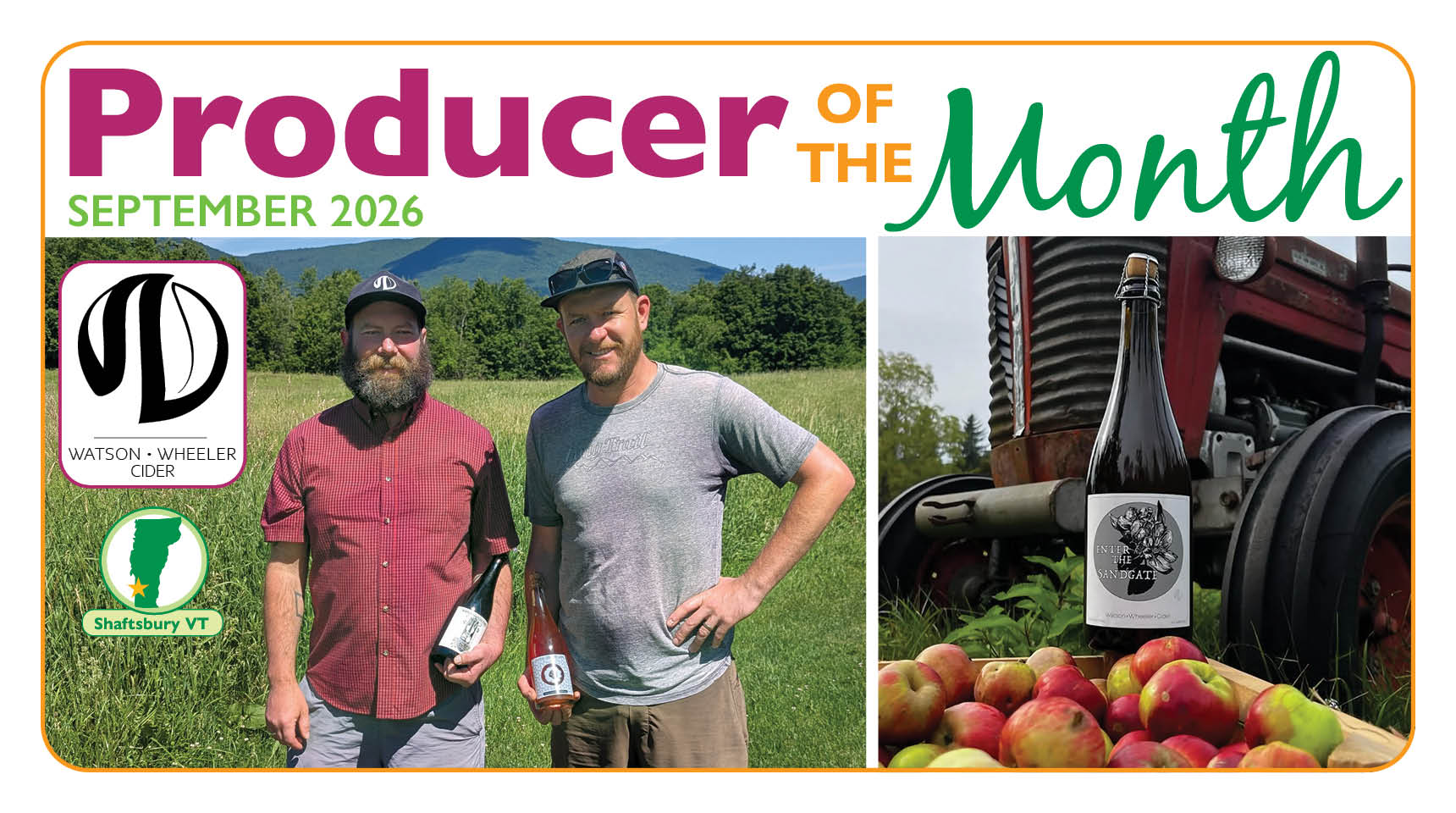
Hundreds of years ago a fiddler and apple lover scattered some apple seeds on his property in Shaftsbury, VT, and now, as a result of that, here we are ripping around an orchard of baby trees at top speed on a farm cart, blasting hard rock from a bluetooth speaker. More on this in a bit, but ah, the unintended and unforeseeable blossoming of positive consequence from something as small as an apple seed – a great reminder to follow your joys as far as you can, as often as you can.
Cein Watson and Bleecker Wheeler travel to the ends of the earth – or at least the ends of Vermont and surrounding states – to source wild apples for their cider, in addition to using those from their own orchards. They have no fear of haunted woods or frightening lore. They regularly visit Sandgate, a tiny Vermont town known to ensnare passersby looking for a way through. There is no maintained road through the North or East ends of town and it is said there are three ways in and two ways out. But do you know what’s in Sandgate? Apples. So they go, but they do so armed with detailed instructions about whose doors they can and cannot knock on and whose lawns they can and cannot walk on.
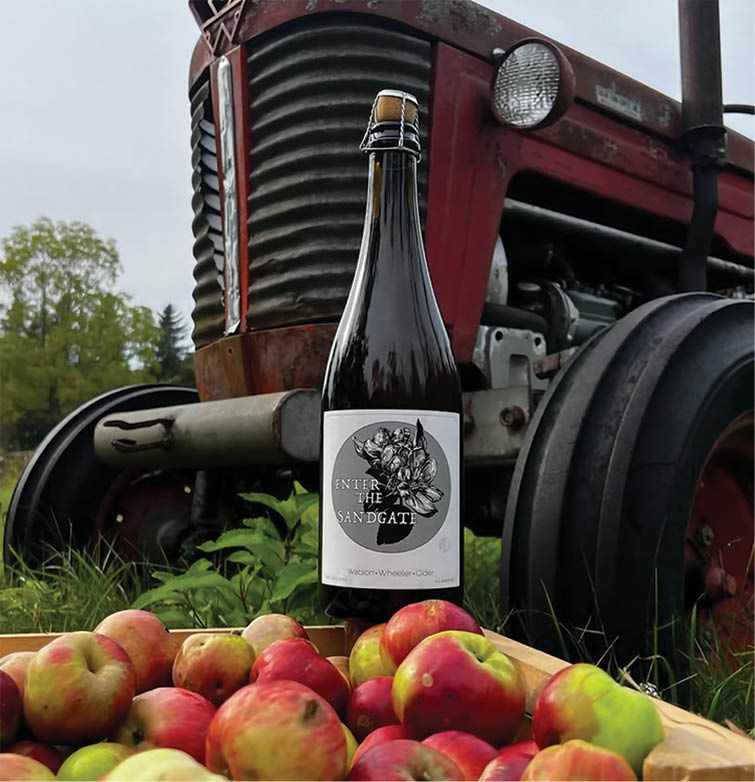
Enter the Sandgate is a cider made from the apples of Sandgate and sold first to the people of Sandgate, making it one of the most sought after and one of the rarest of their regular bottlings. We are able to get our hands on Enter the Sandgate here sometimes at the Co-op, but does anyone know of any special apples in Brattleboro? Do we have any lore that might be cider-inspiring? Cein and Bleecker said they would LOVE to make a Brattleboro cider, so do reach out if you are so moved!
The level of respect Cein and Bleecker have for the communities they make cider for and the apples themselves is readily apparent just by the way they speak. Of course they would not knock on an off-limits door or walk on an off-limits lawn! In addition to frequenting allegedly haunted orchards, they pick wild apples inside the Green Mountain National Forest. In exchange for this privilege, they help care for the apple trees there, which haven’t always been in the best shape, to ensure the survival of those unique species for generations. They also cannot help but spout apple facts in the most engaging, energy-elevating way to anyone who would like to hear them. Luckily, Cein is planning on opening a tasting, education, and events space in the orchard that was planted by his great-great-great-grandfather, so there will soon be a regular channel for the apple facts to flow to the public.
The seeds for many of the trees in this old orchard were strewn about haphazardly by Cein’s great-great-great-grandfather Martin, a fiddle player and all around popular guy. Cein and Bleecker’s cider, Town Fiddler, is an homage to that fateful event. The orchard is a gorgeous apple paradise full of quintessentially twisted and interesting trees. Just picture string lights, good music, good friends, and good cider with the sun setting over the old orchard on a breezy summer evening.

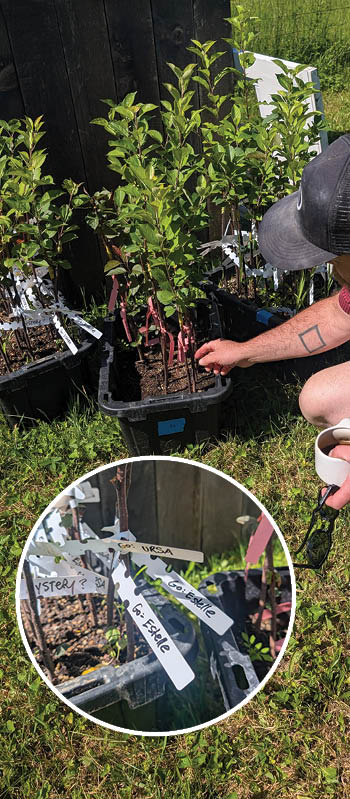
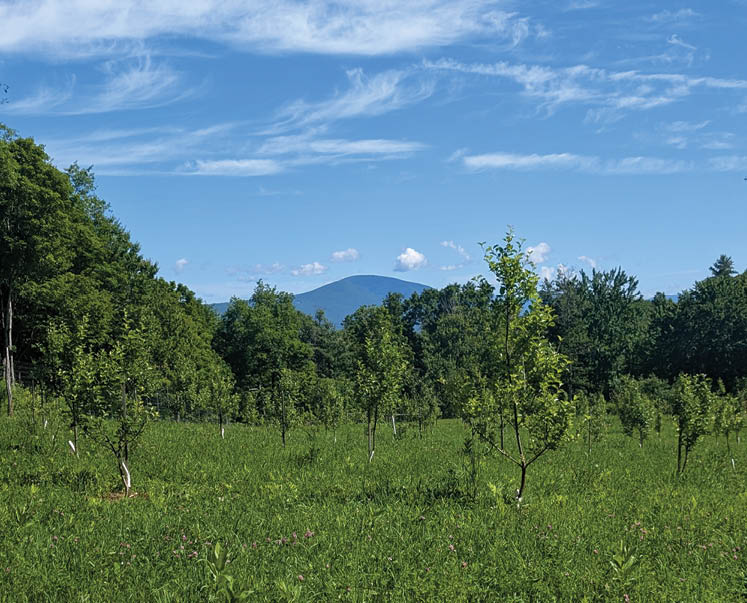
The older trees on both Cein and Bleecker’s separate properties are deeply cherished, but there is also exciting, and much more intentional, orderly expansion happening than Martin the fiddler ever intended. Cein has many new trees growing from grafts of his ancestor’s trees, some named after his children to honor both past and present. Bleecker took us on a tour of his large, stunning new orchard, which will eventually have an incredible, landscaped entryway. We can’t wait to come back in several years’ time when the trees are blossoming and rocking and rolling with fruit. All of these orchards will be lovingly tended for years to come and will allow Cein and Bleecker to more
reliably produce cider from their favorite apples for all of us to enjoy.
The Watson-Wheeler operation is the perfect blend of teamwork and individuality. Cein and Bleecker have their own separate properties on which they grow the things that most interest them. They come together to make sure they are on the same page regarding the business overall, how they might handle certain challenges, and to assist each other with anything in their respective orchards that might need some extra hands or equipment. They both design unique and slightly spooky label art for the bottles. Cein says he likes to imagine his younger self walking into a shop carrying Watson-Wheeler cider, looking at the bottles and thinking, “Hey, that’s a cool label!” He feels proud to be doing something his younger self would have thought was cool.
Though the aesthetic of the labels is a little spooky, the way the business was formed is incredibly sweet. Sweeter than the ciders, which Cein and Bleecker would most often describe as dry, apple prosecco. The two cider enthusiasts met in 2020 when their families made a beautiful habit of holding socially-distanced lawn parties. Both the Watson and Bleecker families have been making cider recreationally in Shaftsbury for generations so, before ever meeting, Cein and Bleecker each had longstanding interest in and experience making cider. They found it refreshing to talk shop and quickly realized they were cider soulmates. They both equally valued non-interventionist practices and the idea of using no additives, back sweeteners, sulfites, or spray. They both have had strong ties to their family farms their entire lives and a desire to return to those farms after years of working other careers. They connected so deeply on these things, they decided to turn their love of cider into Watson-Wheeler. Every day since then has been a frenetic but satisfying scramble to create, run, and sustain the business.
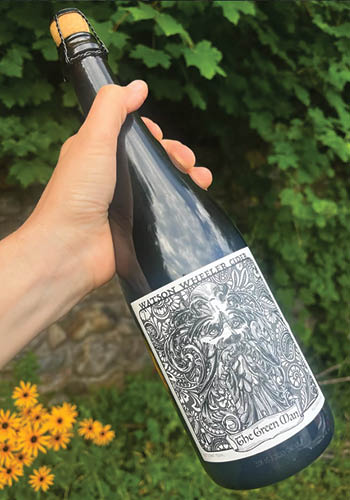
We could not be more fortunate to have two people who are as down to earth and passionate about local apples as Cein and Bleecker are. It was a joy to bask in their apple love, which is so genuine it just naturally spreads. Their hunger for knowledge is so pure that they move forward with what they feel is right before even knowing the terminology for it. For instance, they didn’t fully realize they could call themselves “non-interventionists” until attending a cider conference. They knew they wanted to grow the apples a certain way and they did so because they are principle-driven producers, rather than following the allure of a marketing tactic. And we can say the cider is darn good as a result of the fastidious care put into it. A darn good product made by fantastic people from high-quality local ingredients? Yes. We needed it here at the Co-op and we highly encourage you to try it out.
Written by Sarah Galgano