Singing Cedars Apiaries
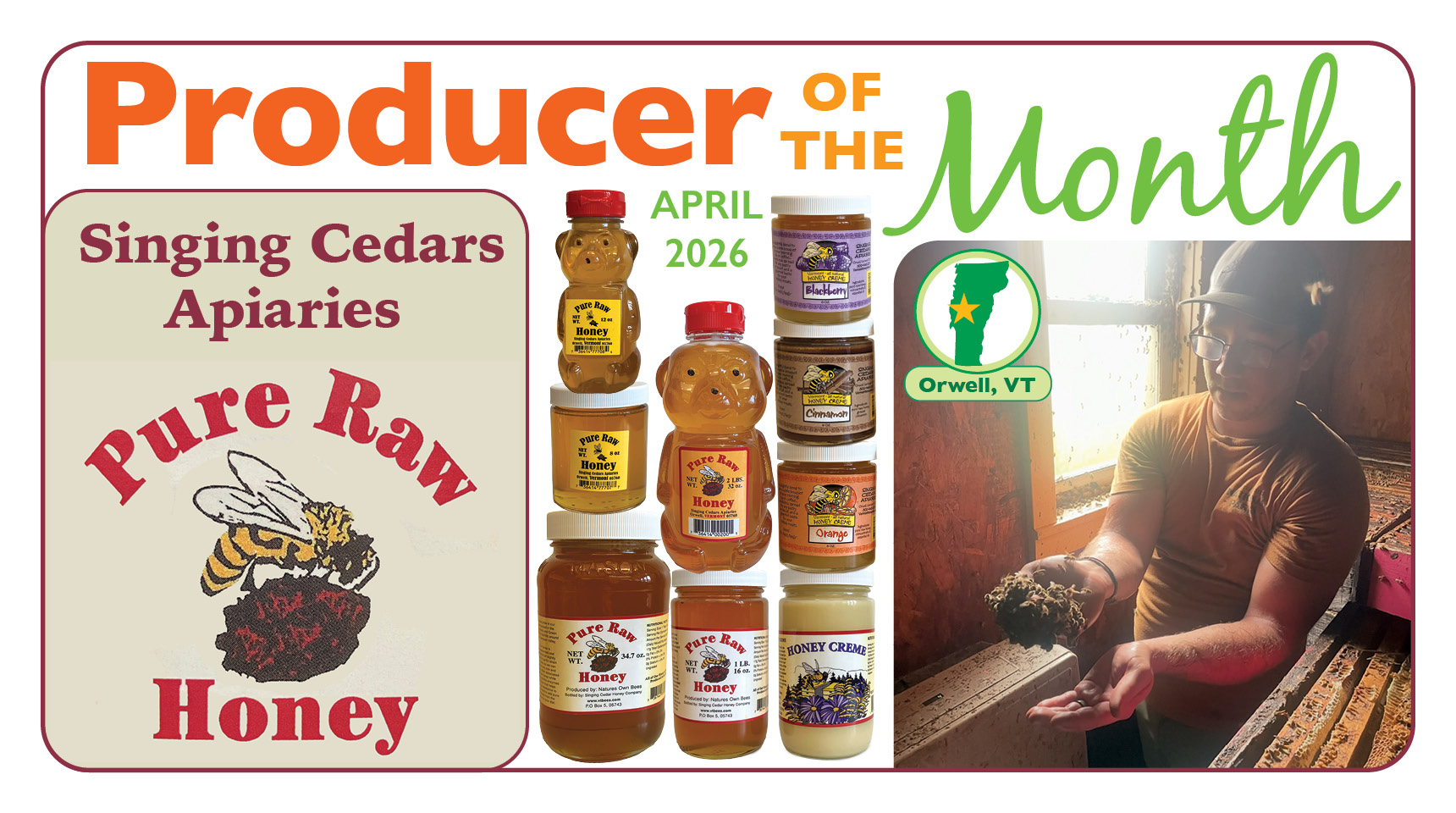
When the nectar flows, the bees know, and they let Tom Duncan know too. The bees tell Tom how they are doing and he is prepared to respond immediately to what’s being said. The hyperbole is light – Tom really does listen to the hives to diagnose them. He can tell just from the quality of sound what to expect when a hive is opened. If there is singing, all is well.
Tom is the Company Manager of Singing Cedars Apiaries, a local beekeeping and honey-making operation. Beekeeping is very much tied to blooming flowers and weather conditions, so it can be a bit fickle, but certainly worth the effort. When nectar season begins in earnest, things ramp up quickly, though this doesn’t happen at the same time every year. A close eye needs to be kept on the hives. When we first got in touch with Tom he answered our call from the road on the way to South Carolina, where the company’s bees overwinter every year. Tom had to make this trip because South Carolina has been facing an unseasonable cold, which is potentially bad news for bees. We were relieved to hear during our next chat that the chilly bees were strong and well. They were singing just the right song!
The bees are brought down to South Carolina for the winter for a few reasons. The death rate of bees in Vermont can reach as high as 60%, which does make it less viable to keep bees here without overwintering elsewhere. Bringing the bees to South Carolina reduces the death rate to 25% in a bad year. The other reason the bees go south is that, by lucky happenstance, the owner of the business, Roland Smith, had a mentor who owned a piece of land there. The land was swampy and great for overwintering bees, but not much else, so the bees have been making the trip south for decades.
Singing Cedars was started in 1971 by Roland and Deborah Smith. Roland grew up beekeeping and decided to earnestly give it a go himself in early adulthood. He was drawn to beekeeping because it was something unusual that also brought his family together. Back then, they would bottle, deliver, and whatever needed to be done together, which is how things are for Tom and his family now. Though the work is demanding, Tom appreciates the way beekeeping has allowed him to experience his two daughters growing up, often helping with the same tasks Roland’s children did when they were younger.
Tom has been with Singing Cedars Apiaries for 15 years and says that, even though it is no longer technically a family business, it feels like one because Roland and Deborah are like parents to him. Roland was actually Tom’s pastor, so the relationship was close even before the business relationship formed. Prior to joining Singing Cedars, Tom was an architect in the construction industry, mostly working in an office building behind a desk. Roland approached Tom saying: “Do you want to go work with some bees?” Tom’s answer was: “I’ll try anything once.” Trying this once turned into a long-lasting vocation.
One thing that was very apparent speaking with Tom is the level of respect he and the team have for the bees. While some are rushing to pull as much honey from the hives as possible before the bees eat it at the end of the season, Tom lets the bees eat the honey. As he says: “If the bees need it, they need it.” There are a few things an apiary can do to control their hives, including feeding queens sugar water to get them to start laying artificially at the beginning of the season. In Tom’s experience, this might produce results faster, but it does not produce better hives. He prefers to flow with the conditions in a way that will produce more naturally strong hives, putting less emphasis on the volume of production at the beginning of the season.
Honey is a very sensitive product and anything used in the environment will be retained in the honey. For this reason, Singing Cedars uses oxalic acid, a substance naturally produced by bees to deal with mites that could damage the hives, rather than harsher chemical pesticides. This was not a risk many other beekeepers were willing to take at the time, saying that oxalic acid was not a strong enough substance to be effective. Singing Cedars went ahead with this change and were able to maintain their numbers and even gain bees in seasons when others were losing bees. Tom and the team do everything they can to maintain the highest standard possible for what goes into the honey, but bees are wild creatures and you can’t stop them from flying to different fields. Still, if Tom finds out the bees are bringing something back to the hive that disagrees with them, he will move the hives so that their radius of flight is further away from whatever that disagreeable thing might be.
Again, Tom can tell when a hive is “angry” by the way it sounds. The sound of the hive also often determines who is able to be a beekeeper. Imagine the sound of one bee buzzing around your head and multiply that by many hundreds, or sometimes even many thousands. The body naturally produces a fear response to even one bee and many people have a hard time dealing with the sound of so many bees. It can be a bit scary! It seems that there are people who try out beekeeping and end up absolutely loving working with the bees and they stay for years and years, or they absolutely hate it and know that they hate it pretty quickly. Tom says there is very rarely a middle ground.
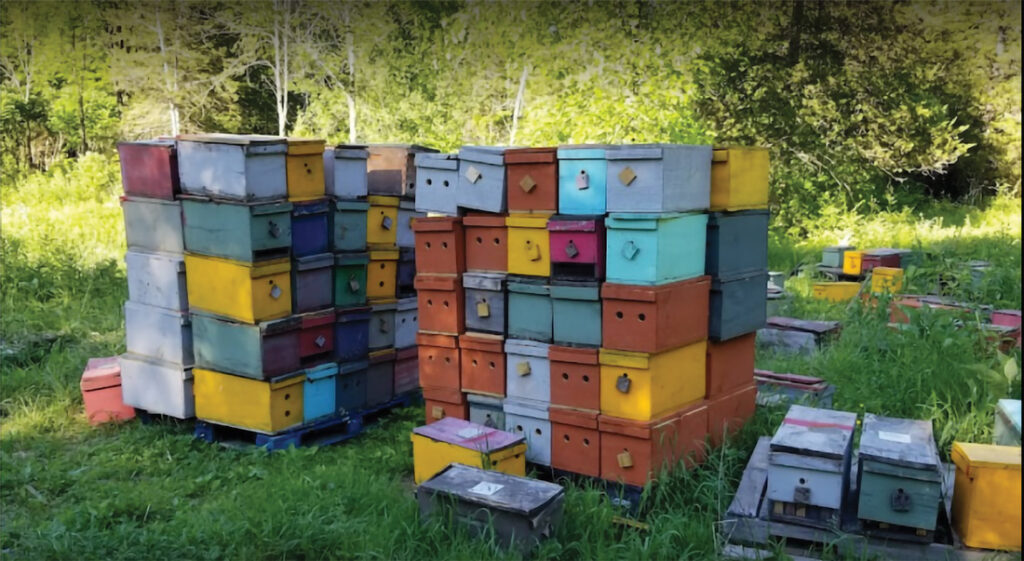
Singing Cedars Apiaries maintains 32 hives per yard, versus a more corporate 300 hive per yard. They want to give the bees, and the employees, a more natural way of living. The smaller numbers are better for the bees, but they are also better for the beekeepers. When work is needed, typically all the work is done in one go and that means the keepers are in their suits for however long it takes to get that work done. Beekeeper suits are hot and the bees are loud! By keeping a smaller number of bees in each area, the keepers can do shorter stints in their suits and take a bit more time in between suited sessions. This is one of many reasons the people who work at the apiary stay there.
The seasonal workers the apiary employs from Mexico have been with Singing Cedars for anywhere from five to thirteen years. The work is strenuous, but Tom deliberately makes workflow decisions that support the health of the employees. Everyone is also firmly part of the apiary family so Singing Cedars would rather pay a little more and give a little more time off just because it’s worth it to treat people the right way. Also, Tom never asks an employee to do something he isn’t willing to do himself, so he is out in the apiary three out of five work days, at a minimum. It was tough to reach him for this interview because he is so actively involved every day, but he managed to carve out time to chat with us, which we appreciate so much!
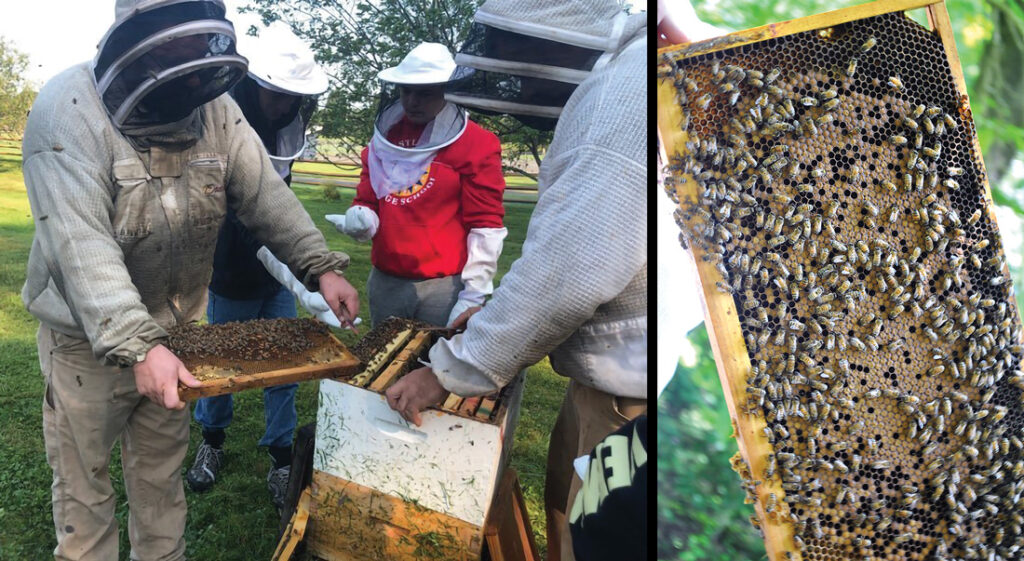
Tom enjoys spreading his love of and knowledge about bees into the community and participates in educational outreach at Fair Haven High School in Vermont. He assists in caring for the school’s hives and teaches students about the logistics of beekeeping, the beekeeping industries, and the impact of bees on ecology. He does this because he feels very strongly that people need to understand that if we don’t have bees, we don’t have food. If we don’t have bees, we don’t have any kind of farming. According to the Center for Food Safety, North America relies on the honey bee to pollinate nearly 95 varieties of fruit and, without them, 70% of all plants would not be able to reproduce and would not be capable of producing food. The health of beehives is intrinsic to the health of food systems around the world and Tom is so invested in spreading this information that he spends his free time doing what he can to educate people about this.
There’s quite a bit of marketing around honey that has become somewhat standardized in the last few decades. Singing Cedars does not pay this marketing much mind. People are often asking for clover honey, which is supposedly a lighter colored honey that comes from clover nectar, but Tom likes to remind people that, again, bees are wild animals and there is no real way to maintain that bees are getting their nectar solely from clover. In fact, light colored honey often comes mostly from dandelion nectar, which is a somewhat taboo thing to reveal in the world of honey. He also feels it’s important to say that no color of honey is inherently better than any other. The same way that cows, goats, and sheep that graze on the changing local flora produce milks and cheeses that are reflective of the terroir, so bees produce different honeys! This is a thing that should be celebrated and enjoyed. It’s something that makes consuming honey special and interesting. Singing Cedars does not and will never mix honey batches just to achieve different colors in the bottle for marketing purposes. Enjoy the seasonal differences in your honey!
Tom would also like people to know that honey does not go bad. Even when it has crystallized, which just means that it has cooled a bit, it can be heated in a double boiler and brought back to its original consistency. You just want to stay below 130 degrees to maintain the enzymes in the honey that lend themselves to the health benefits inherent in the product. Raw, natural honey is antioxidant rich and better for blood sugar regulation than regular sugars.
Tom wanted to leave everyone with one last thought: “Roland started this business with one goal. Be good to everybody. Love everybody and hope that comes through in the honey.”
Singing Cedars Honey Tasting April 10, 11:30am-2:30pm!
Written by Sarah Galgano